Cristian Luțic

Cristian Luțic is a cybersecurity professional and Editor-in-Chief of iSec.News, with experience in security enablement, risk analysis, and vulnerability reporting. As Editor-in-Chief, he is responsible for editorial standards, source verification, and publication oversight at iSec News.
From professional sports to cybersecurity, his career path may have been unconventional, but it has been driven by the same core values: discipline, perseverance, and a passion for doing meaningful, impactful work.
iSec.News Motto: “Only news, only information security and privacy news. No fluff.”
-
Python Software Foundation withdraws $1.5M NSF proposal over DEI restriction
The Python Software Foundation has withdrawn a $1.5 million NSF grant proposal after the agency attached a clause barring recipients from operating programs that “advance or promote diversity, equity, and inclusion,” a condition the PSF said conflicts with its mission.

-
Canada warns of hacktivist breaches at water, energy and farm facilities
The Canadian Centre for Cyber Security warned that hacktivists have repeatedly breached internet-exposed industrial control systems at water, oil and agricultural sites, altering control settings and prompting guidance to remove direct internet exposure, use multifactor VPNs, and report incidents through the Cyber Centre.
-
Researchers warn of ‘AI-targeted cloaking’ that can poison agentic browsers
Security researchers and hCaptcha warn of an ‘AI-targeted cloaking’ technique that serves different content to human browsers and AI crawlers, potentially poisoning models and enabling misinformation; SPLX and hTAG detail examples and risky agent behaviors.
-
Researchers find 10 typosquatted npm packages delivering cross‑platform credential stealer
Researchers reported a set of 10 typosquatted npm packages, uploaded on July 4, 2025 and downloaded over 9,900 times, that deploy an obfuscated, multi-stage information stealer which harvests credentials from browsers and system keyrings on Windows, Linux and macOS.
-
Dentsu says Merkle subsidiary suffered data breach exposing staff and client information
Dentsu disclosed that U.S. subsidiary Merkle suffered a cybersecurity incident that exposed staff and client data, systems were taken offline, data were stolen and impacted individuals are being notified while an investigation continues.
-
High-severity cache-poisoning vulnerability in BIND 9; patches issued after PoC published
CVE-2025-40778 is a high-severity cache-poisoning vulnerability in BIND 9 that can allow remote attackers to inject forged DNS records. Proof-of-concept code is public and fixed versions are available; administrators are urged to apply patches immediately.
-
CISA says two Dassault DELMIA Apriso flaws are being actively exploited
CISA warned that two vulnerabilities in Dassault Systèmes’ DELMIA Apriso are being actively exploited. The flaws, CVE-2025-6205 and CVE-2025-6204, were patched by the vendor in August and have been added to CISA’s KEV catalog; U.S. federal agencies must remediate under BOD 22-01 by Nov. 18.
-
Herodotus Android malware uses human-like typing delays to evade detection
Threat Fabric has identified Herodotus, an Android malware-as-a-service that uses randomized typing delays to mimic human input and evade timing-based detection, and is being distributed via SMS to users in Italy and Brazil.
-
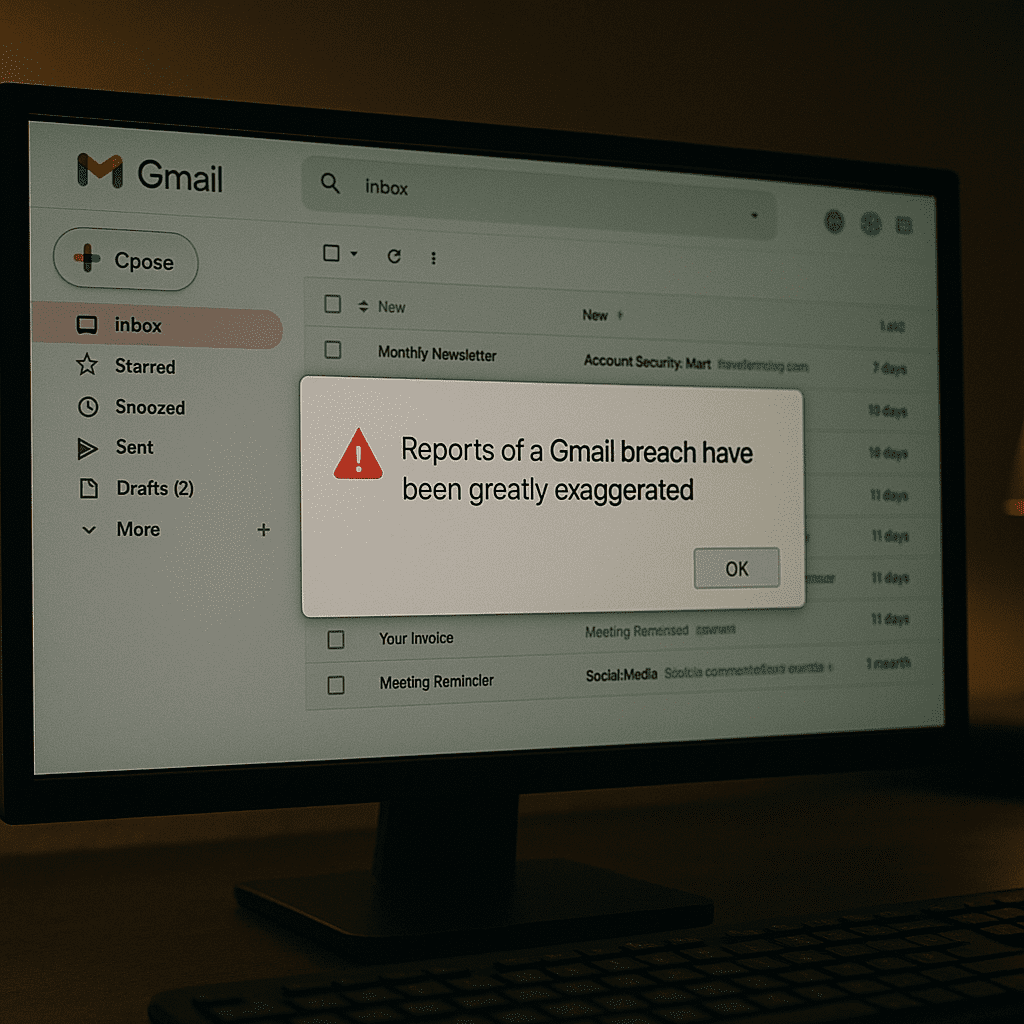
Google denies reports that 183 million Gmail accounts were breached
Google said reports that 183 million Gmail accounts were breached are false; the dataset cited appears to be an aggregation of infostealer-sourced credentials shared with Have I Been Pwned, and users are advised to enable two-step verification, use passkeys and change exposed passwords.